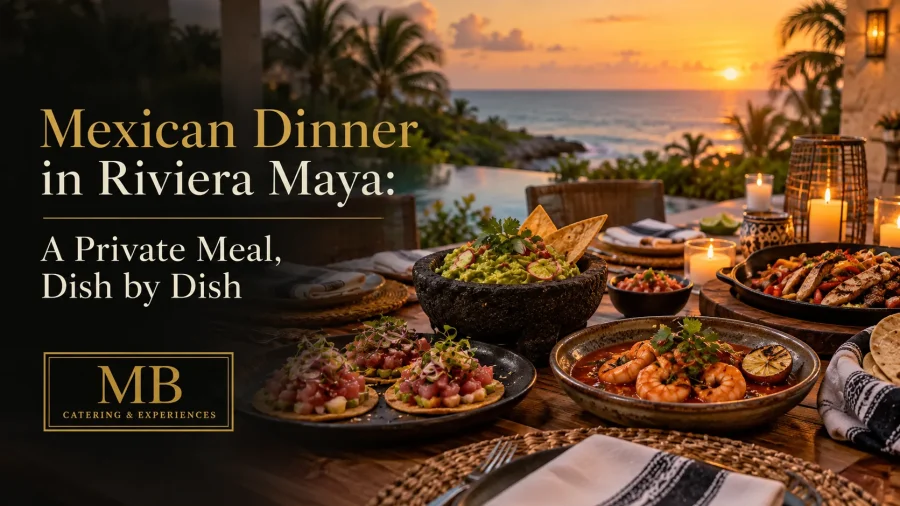
A crisp tostada breaks under the first bite. Warm shrimp arrive coated in a red chile sauce. Later, a platter of grilled meat and vegetables reaches the table, ready for everyone to help themselves.
A Mexican dinner in Riviera Maya can bring those different flavours and textures into one evening at your villa. Knowing a little about the dishes makes choosing that dinner much more enjoyable.
At MB Catering & Experiences, menus are developed around your preferences through our digital food questionnaire. Jorge leads the culinary planning, and our private-chef experiences can bring the preparation and service to a suitable villa or vacation rental.
Here is one way that dinner could unfold, with the food explained along the way.
One Possible Four-Course Mexican Dinner in Riviera Maya
The following is an illustrative savoury menu. It shows a possible combination of dishes, with the final preparations, portions and availability agreed for your booking.
| Course | Dish | What it brings to the meal |
|---|---|---|
| First | Guacamole with crisp corn chips | Creamy avocado and a familiar opening |
| Second | Tostadas de atún | Tuna on a crisp base, with the preparation and dressing agreed |
| Third | Camarones a la diabla | Warm shrimp in a red chile sauce |
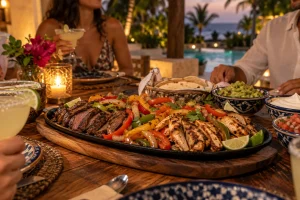
| Fourth | Grilled fajitas | Meat or an agreed vegetable preparation, finished with the flavour of the grill |
This Mexican dinner in Riviera Maya moves through several styles of eating: sharing a starter, enjoying a composed tostada, trying a sauced seafood course and finishing with grilled food.
All four courses in this example are savoury. Dessert can be discussed separately or take the place of a course when the menu is designed.
First Course: Guacamole With Some Texture
Guacamole is familiar, but there is still plenty to notice in a well-prepared bowl.
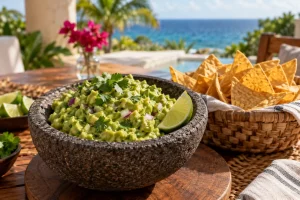
Avocado provides the richness. Lime adds acidity. Onion brings a sharper bite, while fresh chile and cilantro can change the character of each spoonful.
The texture matters, too. Some guests enjoy visible pieces of avocado; others prefer a more thoroughly mashed preparation. Those versions feel different against a crisp corn chip.
Pati Jinich’s chunky guacamole is a useful example of a simple preparation built around avocado, onion, fresh chile, cilantro and lime. It also shows how a short ingredient list can produce a complete dish.
For a Mexican dinner in Riviera Maya, guacamole gives everyone an easy place to begin. Guests can settle into the meal without needing a long explanation before their first bite.
Notice the Avocado Before Adding More
Try the guacamole as it arrives before reaching for extra lime or salsa. That first taste helps you understand the balance the chef has prepared.
Does the avocado remain the main flavour? Is there a fresh crunch from the onion? Does the chile appear immediately or leave a little warmth afterwards?
This is also a useful dish for explaining a preference. “We like pieces of avocado and only a little raw onion” tells the kitchen something specific.
When planning your Mexican dinner in Riviera Maya, mention ingredients you avoid before preparation. Cilantro mixed through a bowl is different from a garnish that can simply be left off.
Second Course: Tostadas de Atún and the Contrast of Crisp and Soft
A tostada provides a crisp tortilla base for its topping. With tuna, the contrast between that base and the fish is a large part of the appeal.
The name “tostadas de atún” does not tell you the entire preparation. Tuna might be served raw, seared or cooked, depending on the recipe. The dressing and garnishes can change the dish just as much.
A Mexican dinner in Riviera Maya should make those details clear before you choose it.
Ask how the tuna will be prepared and what accompanies it. A creamy dressing, a citrus dressing and a cooked tomato-based topping create different experiences.
Published recipes demonstrate that variety. Rick Bayless’s tuna minilla tostadas use a cooked tuna mixture with tomato and herbs, with olives and capers as optional additions. That is one example of how much can sit behind the same broad description.
MB’s proposed preparation would be explained in your menu.

Why Assembly Matters
The topping should reach the tostada close enough to serving for the base to retain its crunch. A wet topping left sitting can soften the tortilla and change the way the dish eats.
That makes this course a good reason to pause the conversation briefly and enjoy the food when it arrives.
Pick up a comfortably sized tostada and take a bite that includes both the topping and its base. The point is to taste the combination: the corn, the fish, the dressing and the garnish together.
If you prefer fully cooked seafood, say so when arranging your Mexican dinner in Riviera Maya. The chef can discuss an appropriate preparation or another course.
Third Course: Camarones a la Diabla and the Character of the Sauce
Camarones a la diabla means shrimp prepared with a red chile sauce, often translated as deviled shrimp.
This course brings warmth and a different texture after the tostada. The shrimp should still be enjoyable in their own right, with a sauce that adds flavour around them.
There is no single universal recipe. Different cooks use different chiles and combinations of ingredients.
Mely Martínez’s explanation of camarones a la diabla describes that variation and uses chipotle in her own version. Other preparations can use dried chiles such as guajillo or chile de árbol.
For your Mexican dinner in Riviera Maya, ask which direction the proposed sauce takes. It may have a smoky character, a pronounced chile flavour or a combination with tomato.

Understand What Is Already in the Sauce
A sauce with chile blended through it cannot be adjusted at the table in the same way as a separate bowl of hot salsa.
That makes the menu conversation useful. If you enjoy a little warmth but find very hot dishes difficult, explain that before the chef prepares the sauce.
You can also ask whether this is the right shrimp dish for your group. Choosing another preparation is perfectly reasonable when the appeal is the seafood itself.
For a Mexican dinner in Riviera Maya, the name of a dish should help you choose something you will enjoy.
Let the Accompaniment Have a Purpose
If this course includes rice or another accompaniment, consider how it works with the sauce.
A small amount of rice can catch the sauce and make a different bite from the shrimp alone. The final arrangement should reflect the size of this course and what follows it.
The chef can also explain whether the shrimp will arrive peeled and ready to eat. That is a small detail worth settling for a seated dinner.
Fourth Course: Grilled Fajitas and a More Generous Finish
After the sauced shrimp, grilled fajitas bring another change.
Here, the appeal is the cooked surface of the meat or vegetables, the juices underneath and the combination served alongside them. A good description should tell you the chosen protein, vegetables and accompaniments.
For a Mexican dinner in Riviera Maya, “fajitas” is a starting point for that description. Confirm whether the proposal uses beef, chicken or a vegetable preparation, and how it will be served.
If beef is selected, the cut and the way it is sliced influence how comfortably it eats. Vegetables also deserve attention: peppers, onions or other agreed choices should bring their own flavour and texture.
Look at the Food Before Adding Every Accompaniment
Try a piece from the platter first. You may notice the browned surface, the seasoning or the sweetness of a cooked vegetable.
Then add the accompaniments you enjoy.
That gives you a chance to appreciate what the cooking has contributed before several sauces or garnishes change the bite.
A shared platter can suit this final course, provided it is easy for everyone to reach. Individual plates are another possibility, with the format agreed when the meal is planned.
This part of a Mexican dinner in Riviera Maya can feel generous without requiring every guest to receive an oversized main after three earlier courses. The complete meal determines the portions.
What Makes These Four Courses Work Together?
The interest comes from the differences between them.
Guacamole begins with a soft, creamy texture. The tostada adds a crisp base and a more composed bite. The shrimp introduce a warm sauce, and the fajitas finish with grilled flavours.
For a Mexican dinner in Riviera Maya, that gives guests several things to enjoy without needing an enormous menu.
The sequence also makes preferences easier to discuss. Someone may love the tostada idea but prefer a cooked topping. Another guest may enjoy grilled food and want a lighter shrimp course beforehand.
Those details can shape the final menu.
This example contains both fish and shellfish. They are separate ingredients and should be discussed separately when sharing dietary requirements. Any alternative needs to be confirmed with the culinary team, including its sauces and garnishes.
A Mexican Dinner Can Reflect More Than One Region
The Riviera Maya is where you are enjoying the meal. A Mexican menu served here can draw on cooking from different parts of the country.
A dish does not become a traditional Yucatecan preparation simply because it is served near Playa del Carmen or Tulum.
For your Mexican dinner in Riviera Maya, you can ask for a particular regional direction or a broader selection of dishes you are interested in trying.
The useful explanation comes at dish level: what it is called, what goes into it and how it is prepared. When a preparation has a specific regional connection, that can become part of the conversation.
Our Cancun Food Guide provides wider background on foods you may encounter during your trip. This dinner can be one opportunity to explore some of those interests at your own table.

Give the Chef a Little Room to Explain
A brief introduction can make an unfamiliar dish easier to enjoy.
For a private Mexican dinner in Riviera Maya, you might ask the chef to explain a particular chile, a preparation you have never tried or the reason an accompaniment appears on the plate.
A useful introduction can be only a sentence or two. Guests can then eat while the food is ready and ask more questions if they are interested.
Some groups enjoy that conversation throughout the meal. Others prefer an introduction at the beginning and uninterrupted time together afterwards.
Mention your preference when planning. It helps the team understand the kind of dinner you want to share.
Frequently Asked Questions
Can We Book a Mexican Dinner in Riviera Maya at Our Villa?
MB can assess a private dinner at a suitable villa or vacation rental. Share the property link, date and guest count. The kitchen, dining space and permission for an outside chef need to be confirmed for the proposed service.
Is This a Fixed Four-Course Menu?
No. It is an illustrative combination. MB uses your digital food questionnaire to understand preferences and requirements, then develops menu options. You can discuss a different sequence, alternative dishes or another number of courses.
Does the Dinner Have to Include Raw Fish or Spicy Food?
No. Explain your preferences before the menu is developed. Tuna tostadas can have different preparations, and shrimp can be discussed in another style if a chile sauce does not appeal. Specific alternatives and dietary arrangements need confirmation.
Can the Fourth Course Be Dessert?
Yes, dessert can be discussed as part of the proposed menu. This example finishes with a savoury course. If you want a sweet ending within four courses, the chef can propose a different sequence and adjust the earlier dishes accordingly.
Plan Your Mexican Dinner in Riviera Maya With MB
Tell us which dishes caught your attention and what you would most enjoy trying. Include your date, property, guest count and any dietary requirements.
We can then develop a dinner around your group, with the preparations explained before you choose.
Contact MB Catering & Experiences to plan your private Mexican dinner.